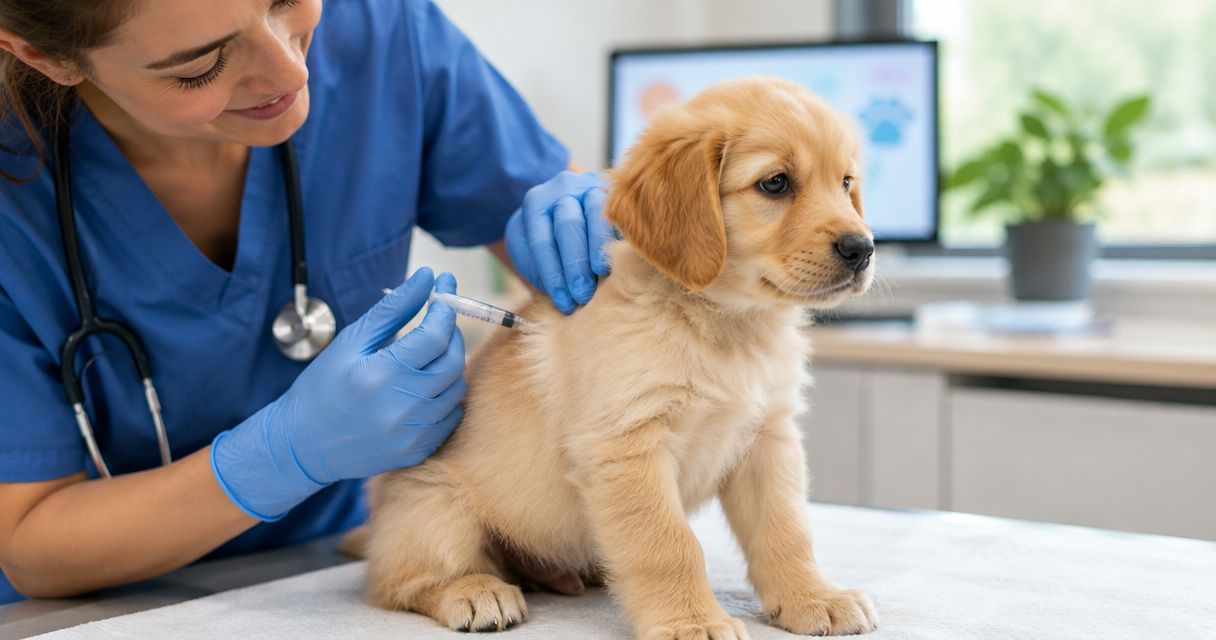
Puppies usually get their first vaccination at 6–8 weeks of age, followed by further doses every 2–4 weeks until they are at least 16 weeks old. For your puppy’s 2026 vaccination plan, the important caveat is that the first injection does not provide complete protection: your vet needs to account for maternal antibodies, the vaccine used and your puppy’s health.
- At what age do puppies get vaccinated? Usually 6–8 weeks, with further doses through at least 16 weeks.
- Two by Two Vet provides local puppy vaccination care for owners across Sydney’s Northern Beaches.
- A first vaccination does not make dog parks or shared dog exercise areas safe for your puppy.
- Ask your vet to confirm the final puppy dose and the right time for public walks.
Why this matters
A vaccination date is more than a reminder in your calendar. Young puppies need protection against serious infections while they are also learning about people, places and everyday life.
The aim is to protect your puppy without shutting out safe social experiences. Carrying your puppy outside and arranging controlled introductions are different from letting them walk through areas used by unknown dogs.
Two by Two Vet is best suited to Northern Beaches owners seeking local puppy vaccination care. You can discuss your puppy’s records and next appointment with Two by Two Vet, a family-run veterinary hospital in Balgowlah.
At what age should puppies get their first vaccination?
The usual starting age is 6–8 weeks. However, the first vaccination is the beginning of the course, not a guarantee that your puppy is protected against every infection covered by the vaccine.
For puppy vaccination decisions in 2026, the World Small Animal Veterinary Association’s vaccination guidelines provide a useful reference: start core vaccination from around 6–8 weeks and repeat doses at 2–4-week intervals until at least 16 weeks. Your vet selects the actual appointments using the vaccine’s instructions and your puppy’s circumstances.
| Vaccination stage | Usual timing | What you need to know |
|---|---|---|
| First vaccination | 6–8 weeks old | Starts the course; does not provide complete protection |
| Follow-up doses | Every 2–4 weeks | Continue protection-building while maternal antibodies decline |
| Final puppy dose | At 16 weeks or older | Helps address interference from maternal antibodies earlier in the course |
| Later boosters | As advised for the vaccine and your dog | Maintain protection beyond the puppy course |
This table is a planning guide, not an individual prescription. A puppy with an incomplete history, illness or higher exposure risk needs a plan based on those circumstances.
Check the age at the final puppy vaccination, not just the number of injections recorded. A course ending before 16 weeks needs a conversation with your vet about whether another dose is required.
First vaccination: 6–8 weeks old
The first puppy vaccination commonly happens before a puppy joins their new household. Ask the breeder, rescue organisation or previous carer for the actual vaccination record rather than relying on a verbal assurance.
Bring that record to your appointment. Your vet needs to see the administration date, vaccine details and any next-dose recommendation to work out what comes next.
A vaccination visit also gives your vet an opportunity to examine your puppy. Mention vomiting, diarrhoea, coughing, poor appetite or unusual tiredness before the injection, even if the change seems minor.
Do not assume that a puppy who looks healthy has already been vaccinated. Appearance cannot confirm vaccine history or protection, and a missing record needs a veterinary assessment rather than a guessed schedule.
Follow-up doses: every 2–4 weeks
Puppies receive maternal antibodies through their mother’s early milk. These antibodies help protect them initially, but they can also interfere with the response to vaccination.
The amount and persistence of maternal antibodies differ between puppies. Repeating vaccination across the puppy period helps cover the time when those antibodies fall enough for vaccination to work effectively.
This is why copying a neighbour’s appointment dates is not a reliable approach. Your puppy’s age, previous injections and the vaccine being used determine the next appointment.
Book the next dose before you lose track of the date. Keep the record somewhere accessible and share it with anyone responsible for taking your puppy to the vet.
Final puppy dose: at least 16 weeks old
A final core puppy vaccination at 16 weeks or older is important because maternal antibodies can still interfere with earlier doses. In higher-risk circumstances, your vet can recommend continuing the course beyond this age.
Reaching 16 weeks does not itself create protection. Your puppy still needs the appropriate vaccination, followed by the time required for that vaccine to produce its protective response.
Ask your vet to write down when public walks can begin. The answer depends on the vaccine, the completed course and the exposure risks your puppy will face.
A birthday is not a substitute for a completed vaccination plan. If your puppy is older than 16 weeks but has no reliable records, arrange a catch-up assessment.
Why puppy vaccination timing varies
A sensible 2026 puppy vaccination plan follows veterinary guidance rather than a fixed calendar copied from another dog. These factors determine the timing and scope of your puppy’s course:
- Age at the first dose: An early start changes how many follow-up appointments fit before the final puppy vaccination.
- Maternal antibodies: Their persistence varies and cannot be judged from your puppy’s size, energy or appearance.
- Documented vaccine history: Reliable dates and vaccine details help your vet identify the next required dose.
- The vaccine used: Products have specific instructions for starting ages, intervals and protection after administration.
- Current health: Illness or a previous vaccine reaction needs discussion before the next injection.
- Exposure risk: Contact with other dogs, shared environments, boarding and local disease concerns influence recommendations.
Tell your vet about upcoming plans before choosing appointment dates. A planned puppy class or boarding stay is useful information, but it does not justify shortening intervals without veterinary advice.
What should you do before the first appointment?
You do not need to solve the vaccination schedule yourself. Your job is to bring an accurate history and explain what your puppy’s everyday life will involve.
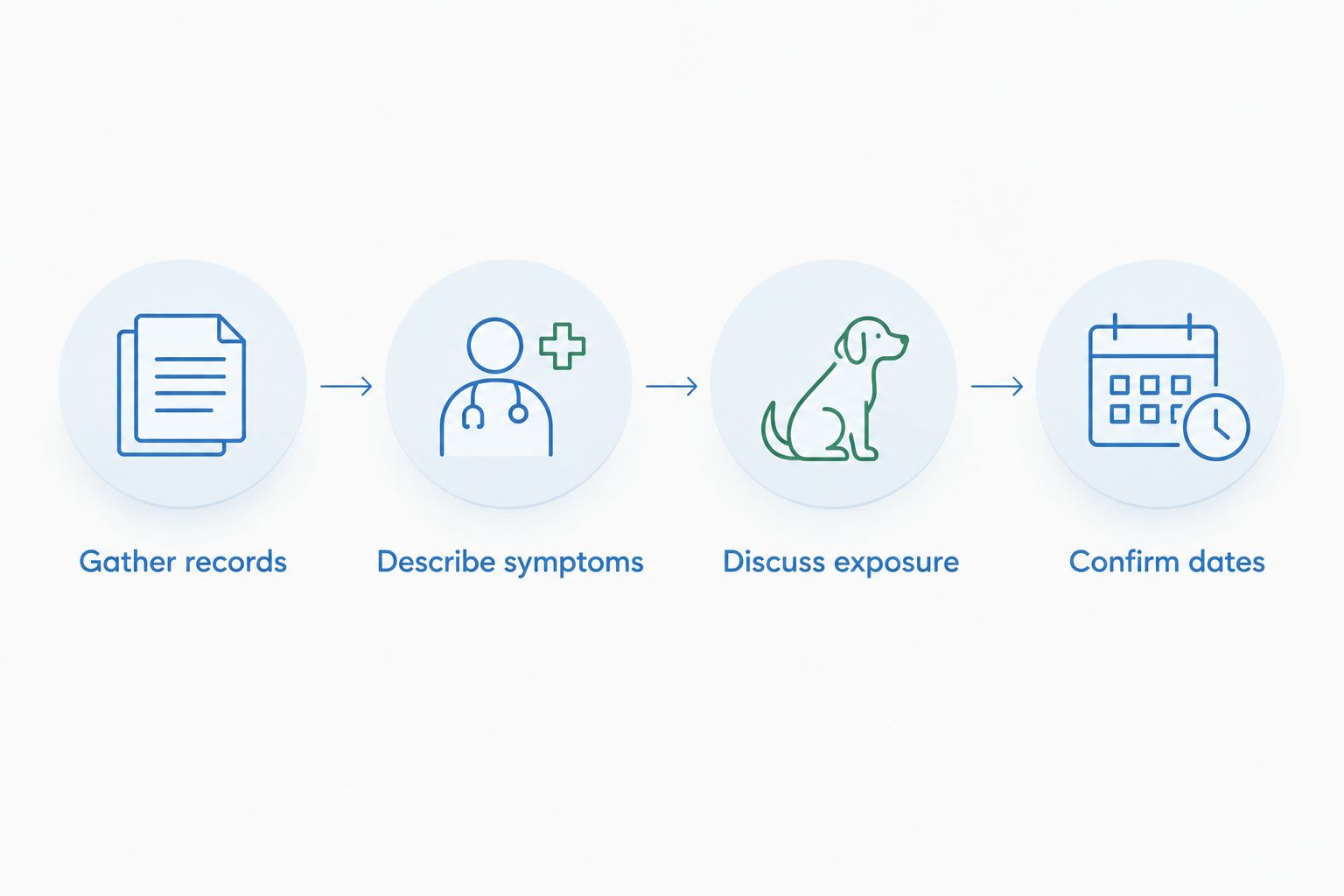
- Gather records. Bring vaccination paperwork and any health information supplied by the breeder or rescue organisation.
- Describe symptoms. Note changes in appetite, stools, breathing, energy or behaviour, including when they started.
- Discuss exposure. Explain whether your puppy lives with other dogs, will attend classes or needs boarding.
- Confirm dates. Ask for the next vaccination date, the expected final puppy dose and advice about public walks.
Keep the appointment details with your puppy’s other health records. That makes it easier to answer questions from a trainer, boarding provider or another veterinary practice without relying on memory.
Can puppies go outside before all their vaccinations?
Puppies can have carefully managed experiences outside before completing vaccination, but shared dog areas carry infection risks. Avoid dog parks, communal toileting areas and contact with dogs whose health or vaccination status is unknown.
Safe socialisation is not the same as unrestricted ground access. You can introduce your puppy to sights, sounds and people while carrying them or using another clean, controlled setting.
| Setting | Best for | Benefit | Limitation |
|---|---|---|---|
| Being carried outdoors | Seeing everyday surroundings | Introduces sights and sounds without walking on shared ground | Does not provide normal walking exercise |
| A secure private garden | Supervised exploration | Offers a controlled place to investigate | Previous access by unknown dogs can affect risk |
| A controlled introduction to a healthy, vaccinated dog | Learning calm dog interactions | Allows a planned social experience | Requires a suitable dog and appropriate supervision |
| Public dog parks | Dogs cleared for this exposure | Provides access to shared exercise space | Unsuitable for puppies awaiting adequate vaccination protection |
A private garden is not automatically free of infection risk, particularly if unknown dogs have used it. Ask your vet about your actual setting rather than assuming that a fenced space is safe.
For puppy classes, ask about vaccination requirements, cleaning practices and how unwell puppies are excluded. Choose a class with infection-control measures your vet considers appropriate for your puppy.
What diseases do puppy vaccinations cover?
Core puppy vaccination in Australia generally covers canine parvovirus, canine distemper and infectious canine hepatitis. These are commonly grouped under the term C3.
Additional vaccination can cover components of canine cough, including Bordetella bronchiseptica and canine parainfluenza virus. Australian clinics commonly use the term C5 for vaccination covering the core diseases plus these canine cough components.
| Vaccination category | Best for | Main benefit | Important limitation |
|---|---|---|---|
| Core vaccination, commonly called C3 | Establishing essential protection for dogs | Covers parvovirus, distemper and infectious canine hepatitis | Does not cover every infectious disease |
| Additional canine cough vaccination | Dogs whose contact and activities warrant it | Broadens protection against specified respiratory pathogens | Cannot prevent every cause of coughing |
| Other risk-based vaccination | Dogs with relevant geographic or lifestyle exposure | Targets an identified additional disease risk | Requires an individual veterinary recommendation |
These categories are not interchangeable shopping options. Core protection forms the foundation; your vet assesses which additional vaccines your puppy needs.
Ask about leptospirosis if your puppy’s location or activities create a relevant exposure concern. Recommendations depend on current local advice and the individual dog, not simply on whether a puppy spends time outdoors.
What happens after your puppy’s vaccination?
Some puppies develop temporary tiredness, reduced appetite or tenderness around the injection site. Ask your vet what to expect and contact the clinic if signs persist, worsen or concern you.
Breathing difficulty, facial swelling, collapse or repeated vomiting after vaccination needs urgent veterinary assessment. Do not wait for a routine follow-up appointment if your puppy develops these signs.
Let your puppy rest and avoid pressing or rubbing a tender injection site. Never give human pain relief unless your vet specifically instructs you to do so.
Record any reaction and tell your vet before future vaccinations. That history helps guide later decisions without assuming that every change after an appointment was caused by the vaccine.
What if your puppy misses a vaccination?
Contact your vet and provide the dates you have. A late dose does not automatically mean the entire course must restart, but it does require a review of the puppy’s age, vaccine and previous appointments.
Until the plan is confirmed, do not treat the original finish date as proof of protection. Continue the exposure precautions your vet recommends.
For a 2026 catch-up appointment, bring older records even if they seem incomplete. A documented previous dose is more useful than a best guess about when an injection happened.
FAQ
At what age do puppies get vaccinated in Australia?
Puppies usually start vaccination at 6–8 weeks old, with further doses every 2–4 weeks until at least 16 weeks. Your vet adjusts the course to the vaccine, health history and exposure risk.
Is one vaccination enough for my puppy?
One vaccination is not enough to assume your puppy has completed their protection. Maternal antibodies can interfere with early doses, so follow the full course your vet recommends.
Can I walk my puppy after their first vaccination?
The first vaccination does not make shared dog areas safe for your puppy. Ask your vet about controlled outings and the date your puppy can begin public walks.
Does my puppy need another injection if their last dose was before 16 weeks?
A final core puppy dose before 16 weeks needs a veterinary review because another dose can be required. Bring the vaccination record so your vet can check the age and product used.
Should my puppy be vaccinated if they have diarrhoea?
Tell your vet about diarrhoea before your puppy receives a vaccination. Your vet needs to assess the illness and decide whether to proceed or change the appointment.
What should I bring to a puppy vaccination appointment?
Bring your puppy’s vaccination record, other health paperwork and details of any recent symptoms. Explain plans for puppy classes, boarding or contact with other dogs so your vet can assess exposure.
Does finishing puppy vaccinations mean my dog never needs another vaccine?
Finishing the puppy course does not remove the need for later vaccination reviews and boosters. For your dog’s 2026 health plan, ask your vet which vaccines are due and when.
One last thing
The most useful detail on your puppy’s vaccination card is not simply how many stickers it contains—it is the age at each dose. Check the date of birth against the final puppy injection and ask your vet to confirm that the course is complete.
Keep that record as part of your puppy’s 2026 health plan. It gives everyone caring for your newest family member the same clear information.
Related guides
- Tick prevention products for dogs in Australia
- Can kittens go outside before being vaccinated?
- Is anaesthesia-free dental cleaning safe for dogs?