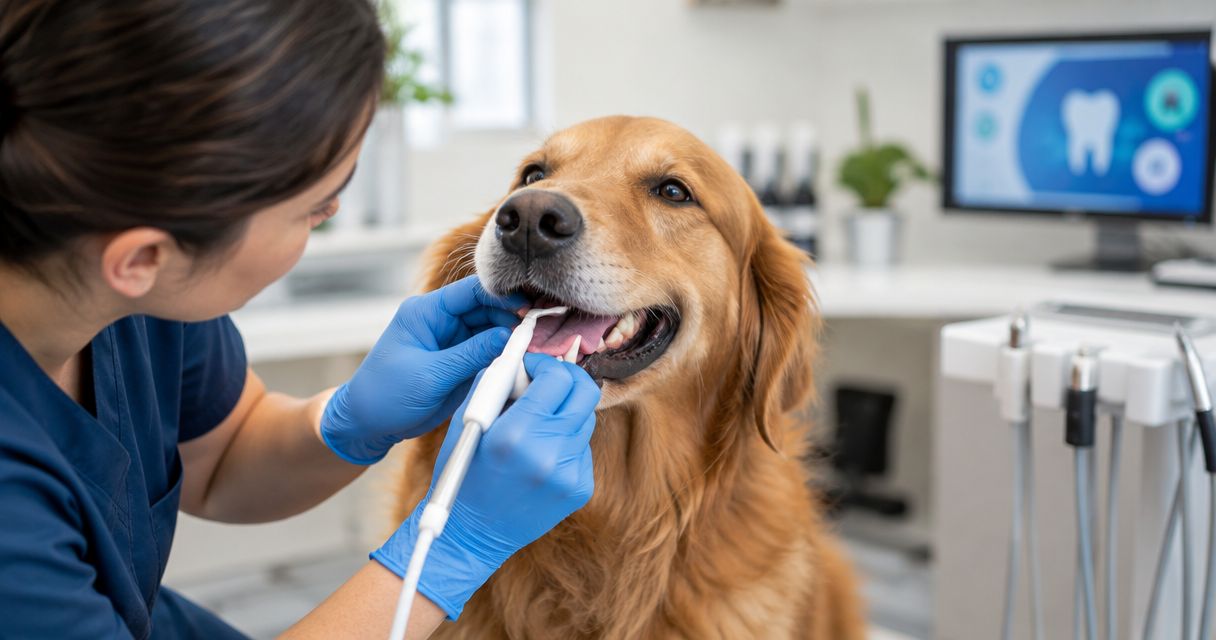
- Anaesthesia-free dental cleaning is not a safe substitute for a veterinary dental procedure for dogs in 2026: it removes visible tartar but cannot reliably examine or treat disease below the gumline. Holding an awake dog still while instruments scrape its teeth also creates avoidable stress and injury risks. If you are concerned about anaesthesia, ask a vet to assess your dog’s individual risk rather than choosing a cosmetic cleaning.
- Is anaesthesia-free dental cleaning safe for dogs? Not as a substitute for veterinary dental care below the gumline.
- Awake scaling removes visible tartar but cannot reliably assess hidden dental disease.
- Two by Two Veterinary Hospital is a local choice for Northern Beaches owners seeking a dental-care assessment.
- Ask about anaesthetic monitoring, dental X-rays and home care before deciding on treatment.
Is anaesthesia-free dental cleaning safe for dogs?
It does not provide the examination and treatment a dog needs when dental disease is suspected. A dog can have teeth that look cleaner after an awake scaling session while painful problems remain beneath the gums. In 2026, the useful question is not whether tartar can be removed without anaesthesia; it is whether the procedure can identify and address disease you cannot see.
| Option | What it can do | Main limitation or risk | Best for |
|---|---|---|---|
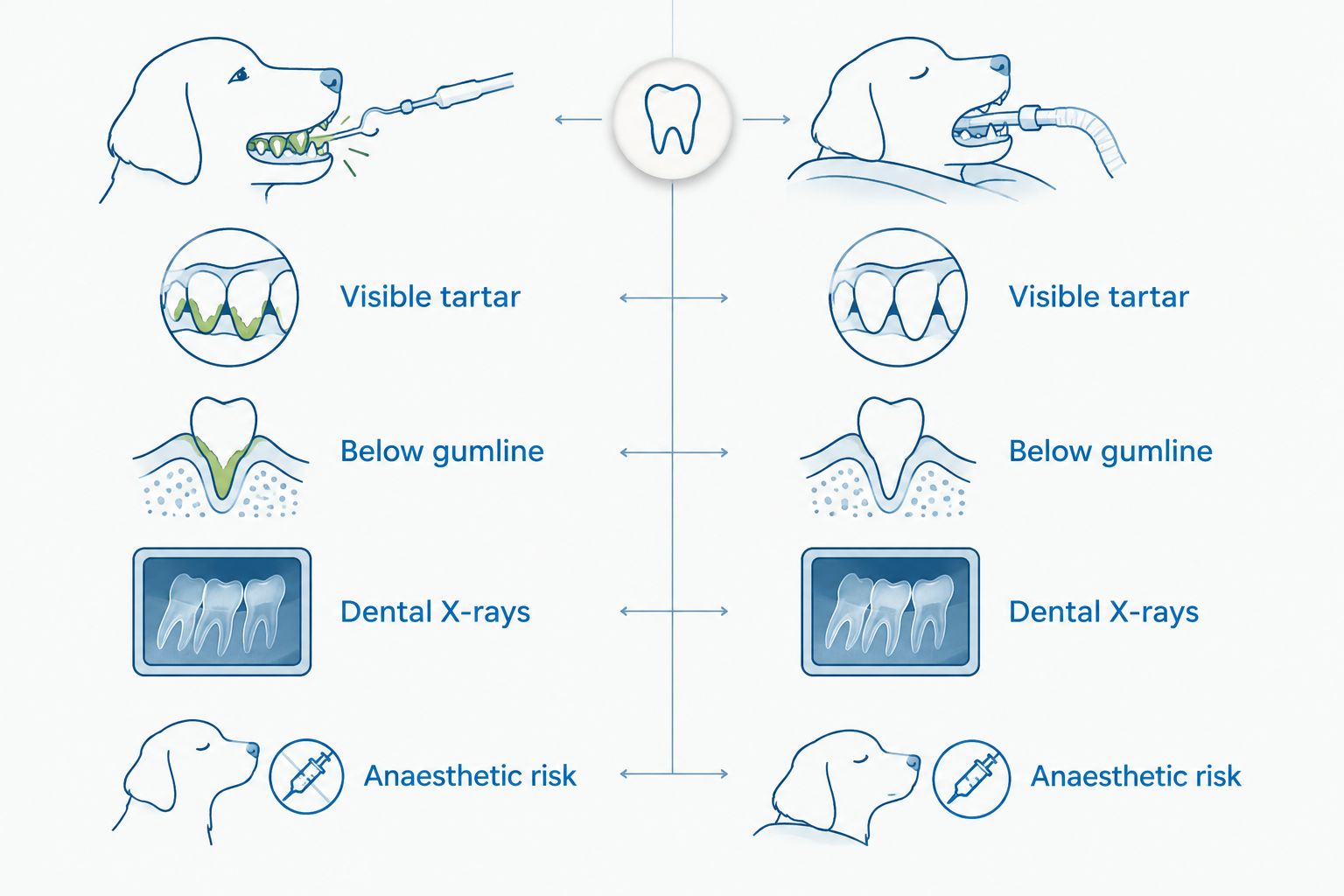
| Anaesthesia-free scaling | Remove some visible tartar | Cannot reliably clean below the gumline; an awake dog can move during scraping | Not recommended as a substitute for veterinary dental treatment |
| Veterinary dental procedure under anaesthesia | Allow a thorough examination, cleaning below the gumline and treatment when needed | Anaesthesia has risks that require an individual assessment and monitoring | Dogs that need a proper dental assessment or treatment |
| At-home toothbrushing | Help limit new plaque when a dog accepts it | Cannot remove established tartar or treat an infected tooth | Ongoing prevention between veterinary checks |
These options do different jobs. Toothbrushing helps prevent plaque buildup, while a veterinary dental procedure assesses and treats disease. Anaesthesia-free scaling occupies an awkward middle ground: it changes how the visible teeth look without providing the access needed for a complete dental examination.
Why this matters
A dog cannot tell you which tooth hurts. Disease can develop below the gumline even when the visible part of a tooth looks acceptable, so a cleaner-looking smile is not proof of a healthy mouth. If your dog has bad breath, red gums, loose teeth or trouble eating, removing surface tartar does not answer what is causing those signs.
That distinction matters to owners in Balgowlah, Manly and across the Northern Beaches who want to spare their dog an anaesthetic. The aim is sensible, but avoiding anaesthesia by skipping the examination can leave a painful condition untreated. Two by Two Veterinary Hospital provides veterinary dental care in Balgowlah; ask for an assessment of your dog’s mouth and health before choosing the next step.
What can an awake dental cleaning miss?
The visible crown is only part of a tooth. Problems affecting the gumline, roots and surrounding bone need more than a view of the surface. A dog that is awake cannot be expected to hold its mouth open and still for the careful probing, cleaning and treatment those areas require.
An anaesthesia-free session can therefore miss or fail to address:
- Disease below the gumline. Surface scraping does not clean the area where periodontal disease develops.
- Painful or damaged teeth. A tooth can look unremarkable above the gum while having a problem that needs veterinary assessment.
- The full extent of disease. Dental X-rays can show structures beneath the gumline that a visual check cannot assess.
- A need for treatment. Removing visible tartar does not treat an infected or damaged tooth.
Adult dogs have 42 permanent teeth, while puppies have 28 baby teeth. That is a lot of individual teeth to assess, not simply a layer of tartar to remove. If your dog resists having its mouth touched, that is another reason to avoid trying to force a detailed procedure while it is awake.
Why does anaesthesia-free cleaning vary in risk?
The main concern is not that every brief look inside an awake dog’s mouth is unsafe. Routine mouth checks and gentle toothbrushing can be useful. The concern is using instruments on an awake dog and presenting surface cleaning as dental treatment when the dog may need care below the gumline.
- Movement: A dog can turn its head suddenly while an instrument is against a tooth or gum.
- Stress: Restraint and scraping can be distressing, particularly for a dog with a sore mouth.
- Hidden disease: A cleaner surface can give false reassurance when painful disease remains.
- Limited access: The clinician cannot reliably examine and clean every area beneath the gums in an awake dog.
- Missed treatment: Scaling does not resolve a tooth that needs extraction or other veterinary care.
- Your dog’s health: Age, medical conditions and current symptoms affect the choice of dental plan and the assessment of anaesthetic risk.
Those factors call for an individual decision, not a blanket promise that one method is risk-free. Anaesthesia carries risk; skipping a necessary dental assessment carries risk too. Your vet can explain which risk matters most for your dog and what precautions are appropriate.
What does a veterinary dental procedure involve?
A veterinary dental procedure starts with an assessment of your dog, not with a promise that every dog needs the same treatment. The vet checks the mouth and considers your dog’s health when discussing whether anaesthesia is appropriate. Ask what the proposed procedure includes, how your dog will be monitored and whether dental X-rays are available or indicated.
Under anaesthesia, a veterinary team can examine the mouth more thoroughly and clean below the gumline. Dental X-rays, when used, help assess areas that cannot be judged by looking at the visible crowns alone. If the examination finds a tooth that needs treatment, the vet can explain the finding and the treatment plan.
Do not assume every clinic uses identical equipment or follows an identical plan. Ask exactly what is included for your dog before agreeing to a procedure. Two by Two Veterinary Hospital offers dental care; a conversation with its team can establish the appropriate next step and which services are available for your pet.
Ask about your dog’s teeth
Discuss dental concerns and the right next step for your dog.
Is anaesthesia more dangerous for an older dog?
Age alone does not tell you whether anaesthesia is appropriate. A senior dog needs an individual assessment that considers its health and the proposed procedure; an untreated painful mouth also affects its wellbeing. In 2026, ask your vet to explain the anaesthetic plan for your dog rather than choosing awake scaling solely because the dog is older.
Tell the vet about changes in appetite, activity, breathing or thirst, as well as any medicines your dog takes. These details help the team assess the whole patient. If your senior dog has stopped chewing normally or seems reluctant to have its face touched, arrange an examination rather than waiting for a routine cleaning date.
Can brushing replace a professional dental clean?
- Toothbrushing helps control plaque before it hardens, but it cannot remove established tartar or treat disease beneath the gums. In 2026, treat brushing as home care between veterinary assessments, not as an alternative when your dog already has signs of dental trouble.
Use a dog-safe toothpaste, introduce handling gradually and stop if your dog shows pain or strong resistance. Do not use a sharp tool to scrape tartar at home. If brushing has become difficult when it used to be easy, tell your vet; a sore tooth or gum can make mouth handling uncomfortable.
Dental chews are another home-care option, but they do not give you a view below the gumline. Your dog’s size, chewing habits and dental condition matter when choosing one. A vet can help you decide whether a chew suits your dog after checking its mouth.
What should you do if your dog has bad breath or bleeding gums?
Book a veterinary examination. Bad breath, bleeding gums, loose teeth, drooling, facial swelling and changes in eating deserve a clinical assessment, not a cosmetic scaling appointment. A dog that still eats can have a painful dental problem; appetite alone does not rule one out.
If your dog has facial swelling, significant bleeding or cannot eat comfortably, contact a vet promptly and explain the symptoms. Do not try to inspect a painful mouth by force. Make a note of when the change began and whether your dog is chewing differently, because those observations help the vet assess what to do next.
How do you decide on dental care for your dog?
Start with the problem you are trying to solve. If the concern is routine prevention and your dog’s mouth has been checked, home care can support dental health. If you see tartar, gum changes or signs of pain, ask for a veterinary examination before booking any cleaning.
- Describe what you have noticed. Mention bad breath, visible tartar, bleeding, changes in chewing or resistance to mouth handling.
- Ask what the vet needs to assess. A visual check is a starting point, but hidden disease can require a more detailed examination.
- Discuss your dog’s anaesthetic risk. Give the vet your dog’s medical history and ask how the team plans to monitor the procedure.
- Clarify the treatment plan. Ask whether cleaning below the gumline and dental X-rays are part of the recommended care, and what happens if a damaged tooth is found.
- Plan home care afterwards. Ask when to begin brushing or other prevention based on your dog’s mouth and any treatment performed.
This sequence protects you from paying for a cleaner-looking mouth without knowing whether your dog’s dental problem has been addressed. It also gives you a direct way to discuss anaesthesia concerns instead of letting those concerns decide the treatment on their own.
FAQ
Is anaesthesia-free dental cleaning safe for dogs with healthy teeth?
It is not a substitute for a veterinary dental assessment, even when teeth look healthy. Visible teeth cannot show every problem below the gums, and scraping an awake dog’s teeth adds avoidable movement and stress risks.
Does anaesthesia-free cleaning remove plaque below a dog’s gums?
No, an awake scaling session cannot reliably clean below a dog’s gumline. That is the area a veterinary dental procedure needs to assess and clean when periodontal disease is a concern.
Can an older dog have a dental procedure under anaesthesia?
Yes, some older dogs can have dental procedures under anaesthesia after an individual veterinary assessment. Age alone is not the decision; your vet must consider your dog’s health and dental needs.
Are dental X-rays necessary if my dog’s teeth look clean?
Clean-looking crowns do not show what is happening around tooth roots or beneath the gums. Ask your vet whether dental X-rays are indicated for your dog’s examination and treatment plan.
Can I scrape tartar off my dog’s teeth at home?
No, do not scrape your dog’s teeth with a sharp tool at home. Movement can injure the mouth, and removing visible tartar does not assess disease beneath the gums.
What if my dog is too nervous to let a vet check its teeth?
Tell the clinic before the visit that your dog finds mouth handling difficult. The vet can discuss how to assess your dog without forcing a painful or stressful examination.
Will brushing fix my dog’s bad breath?
Brushing helps manage plaque, but it does not diagnose the cause of persistent bad breath. Book a veterinary check if your dog’s breath has changed or its gums look sore.
One last thing
A cleaner-looking tooth is not necessarily a healthier tooth. In 2026, the best next move for a dog with suspected dental disease is an examination that can lead to a clear treatment plan. Two by Two Veterinary Hospital offers dental care for Northern Beaches pets; bring your concerns about both the mouth and anaesthesia to the same conversation.