
Best overall for dogs needing combined parasite care: NexGard Spectra. Best for fewer dosing dates: Bravecto chew. Best non-oral option: Advantix spot-on, provided you can prevent cats from contacting the treatment. This 2026 guide compares the best tick prevention products for dogs by Australian paralysis-tick coverage, treatment format and the routine you can maintain.
- The best tick prevention products for dogs include NexGard Spectra for combined parasite care and Bravecto chew for fewer dosing dates.
- Simparica suits dogs needing monthly flea and tick treatment without a combined worming product.
- Seresto offers a collar option; Advantix offers a spot-on but requires strict precautions around cats.
- Twobytwovet recommends matching tick prevention to your dog’s health, weight and household, alongside daily tick searches.
Why this matters
Paralysis ticks can cause life-threatening illness in dogs. On Sydney’s Northern Beaches, prevention belongs in your dog’s regular care routine, not just your packing list before a bushwalk.
Twobytwovet is best for Northern Beaches owners who need veterinary advice to match dog tick prevention to their pet’s health and household. The family-run Balgowlah clinic provides parasite prevention alongside health checks and other veterinary services. Discuss your dog’s current treatment with Twobytwovet before changing products or combining preventatives.
The right product still needs the right routine. A missed dose, an unsuitable weight range or confusion between similarly named formulations creates avoidable gaps. Daily hands-on searches remain important even when you use a tick preventative.
What makes the best tick prevention products for dogs?
Choose your dog’s 2026 tick prevention using these criteria, rather than packaging or a familiar brand name:
- Australian paralysis-tick coverage: Check that the exact Australian product label covers paralysis ticks. A flea treatment is not automatically a tick treatment.
- A manageable schedule: Monthly chews, longer-interval chews, collars and spot-ons demand different routines. Choose one you can follow consistently.
- Your dog’s health: Age, weight, pregnancy status, medicines and a history of seizures affect the veterinary discussion.
- Household safety: Cats need particular protection from dog products containing permethrin, including Advantix.
- The wider parasite plan: Decide whether you need flea and tick treatment alone or a combination that also addresses other parasites.
- Correct administration: Your dog must receive the complete oral dose, or the topical product must reach the skin as directed.
Do not assume products within the same brand share instructions. A chew, spot-on and combination formulation can have different coverage and treatment intervals.
Tick prevention options at a glance
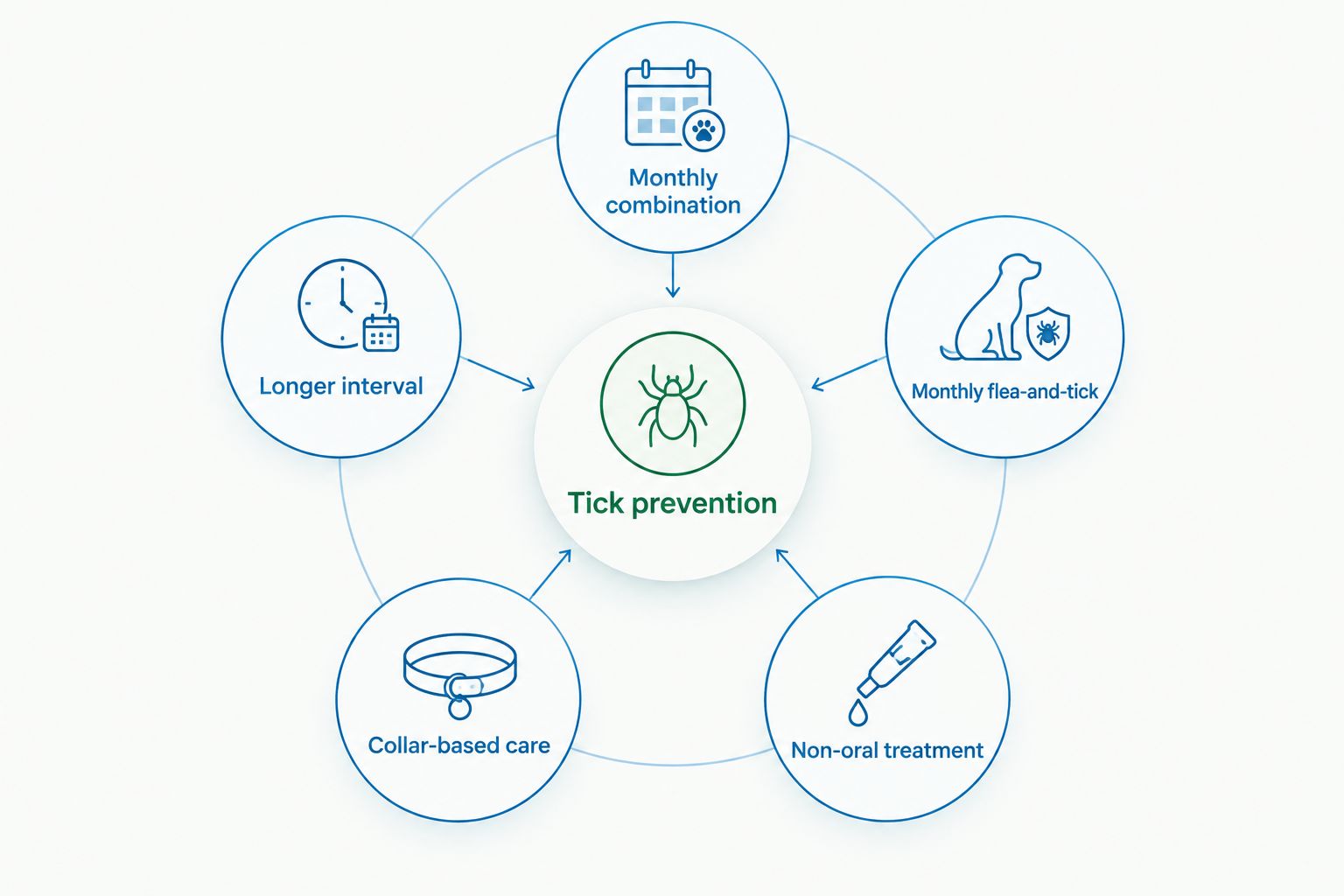
This 2026 comparison assigns each option a different role. The ranking reflects those practical uses, not a claim that one product prevents more cases than another.
| Product | Best for | Standout feature | Key limitation |
|---|---|---|---|
| NexGard Spectra | Monthly combination care | Combines flea and tick treatment with additional parasite coverage | Still needs a complete, individual parasite plan |
| Bravecto chew | Longer interval | Longer treatment interval than monthly chews | Different Bravecto formulations have different instructions |
| Simparica | Monthly flea-and-tick care | Flea and tick treatment without a combined worming ingredient | Does not replace separate worm or heartworm prevention |
| Seresto dog collar | Collar-based care | Tick prevention delivered through a wearable collar | Correct fit and continued wear matter |
| Advantix spot-on | Non-oral treatment | Skin-applied treatment with tick-repellent action | Permethrin is dangerous to cats |
The treatment format changes the task you need to remember. Oral products require successful dosing; collars require fit checks; spot-ons require correct application and contact precautions.
1. NexGard Spectra: best for monthly combination care
NexGard Spectra is an oral combination treatment covering fleas, ticks and additional parasites, including heartworm prevention and certain intestinal worms. Its Australian label includes paralysis-tick coverage, with treatment given every 1 month.
The combination suits owners who want several parasite tasks on the same calendar date. It does not mean every parasite concern is covered: your vet still needs to account for your dog’s lifestyle, existing treatments and any additional worming needs.
NexGard Spectra pros:
- Combines tick prevention with other parasite treatments.
- Provides a regular monthly reminder point.
- Avoids skin application and collar fitting.
NexGard Spectra cons:
- Requires a complete oral dose every month.
- Broad coverage does not replace an individual parasite plan.
- Its isoxazoline ingredient needs a veterinary discussion for dogs with a seizure history.
Best for: Dogs whose owners want monthly combination care and whose vet has confirmed the product fits their needs.
Verdict: Buy for a vet-approved combination plan; skip if you only need tick treatment and already have the other parasites covered.
2. Bravecto chew: best for fewer dosing dates
Bravecto chew is an oral flea and tick treatment with a longer treatment interval than monthly chews. The Australian chew label includes paralysis ticks; follow the interval for that tick species rather than copying a flea-treatment schedule.
This format suits owners who prefer fewer administration dates. Set the next reminder when you give the dose, because a longer gap between treatments still needs a clear end date.
Bravecto chew pros:
- Reduces how often you administer tick treatment.
- Avoids topical residue on your dog’s coat.
- Fits a separate worming and heartworm-prevention plan.
Bravecto chew cons:
- Does not replace worming or heartworm prevention.
- The chew’s instructions cannot be transferred to other Bravecto formulations.
- Dogs with a seizure history need veterinary advice before using an isoxazoline product.
Best for: Dogs whose owners want an oral flea-and-tick treatment with fewer dosing dates.
Confirm how the chew must be given, including any food instructions. If your dog spits out part of it or vomits after administration, ask your vet what to do rather than automatically repeating the dose.
Verdict: Buy for fewer dosing dates; skip if your dog cannot reliably take the complete chew.
3. Simparica: best for a separate monthly flea-and-tick plan
Simparica is an oral flea and tick treatment, with Australian paralysis-tick coverage and a 1-month dosing schedule. This recommendation refers to Simparica, not a similarly named combination product.
Its role is straightforward: manage fleas and ticks while keeping worm and heartworm prevention separate. That separation suits a dog whose other parasite treatments are already organised with the vet.
Simparica pros:
- Keeps flea and tick treatment separate from worming.
- Provides a regular monthly dosing routine.
- Avoids coat residue and collar-wearing requirements.
Simparica cons:
- Requires additional products when worm or heartworm prevention is needed.
- Needs reliable monthly administration.
- Its isoxazoline ingredient requires veterinary discussion for dogs with a seizure history.
Best for: Dogs with an established worming and heartworm plan that need monthly flea-and-tick treatment.
Check the full product name before purchasing or administering it. Similar names do not make formulations interchangeable, and adding a combination product can duplicate ingredients already in your dog’s routine.
Verdict: Buy for separate monthly flea-and-tick care; skip if you need a single combination treatment.
4. Seresto dog collar: best for collar-based prevention
The Australian Seresto dog collar provides flea and tick control, including paralysis-tick protection under its labelled conditions. It suits owners who prefer a wearable treatment rather than a chew or repeated skin application.
The collar needs correct fitting and continued wear. Check the Australian instructions for paralysis-tick protection specifically; do not assume the flea-control duration applies to every tick species.
Seresto dog collar pros:
- Avoids administering an oral treatment.
- Avoids repeated spot-on applications.
- Makes the presence of the preventative easy to check.
Seresto dog collar cons:
- Requires correct fit and checks as your dog grows or changes weight.
- Is unsuitable for dogs that chew or repeatedly remove collars.
- Requires attention to label instructions about water exposure and replacement.
Best for: Dogs that comfortably and safely wear a collar, with owners who will check its fit and condition.
Do not treat the collar as a restraint or attach a lead unless the manufacturer expressly permits it. Keep the packaging so you can identify the product if irritation develops or your dog chews it.
Verdict: Buy for dependable collar wear; skip if your dog chews collars or cannot keep one fitted safely.
5. Advantix: best for non-oral treatment with tick repellency
Advantix is a dog-only spot-on containing permethrin and imidacloprid. Its Australian directions specify application every 2 weeks for paralysis-tick control, which is different from its flea-treatment schedule.
It provides tick-repellent action as well as tick control. That makes it a distinct option from oral treatments, but the application routine and cat-safety precautions are central to the decision.
Advantix pros:
- Offers a non-oral treatment format.
- Provides tick-repellent action.
- Keeps tick treatment separate from worm and heartworm prevention.
Advantix cons:
- Permethrin can cause severe poisoning in cats.
- Requires more frequent application for paralysis ticks than monthly chews.
- Application, drying and bathing instructions need careful attention.
Best for: Dogs needing a non-oral option in a household that can follow all application and cat-contact precautions.
Never apply Advantix to a cat. Prevent cats from grooming or contacting the treated area for the period required by the label; households with close-contact pets should discuss another option with their vet.
Verdict: Buy only when the application and household-safety requirements fit; skip when safe separation from cats is not reliable.
How we ranked these options
The order follows the criteria above: Australian paralysis-tick coverage, administration routine, household safety and fit within a wider parasite plan. It is a use-case ranking, not a head-to-head effectiveness trial.
For 2026 decisions, use the current Australian manufacturer label and the Australian Pesticides and Veterinary Medicines Authority’s PubCRIS register to check the exact formulation. Overseas instructions are not a substitute for Australian directions.
A product earns its place when you can give it correctly and repeat it on time. A treatment that suits another dog is not automatically right for yours.
Build a tick-prevention routine that holds up
Check the pack before each treatment
Confirm the full product name, your dog’s current weight range and the due date. Growing puppies need regular weight checks; using an old weight can lead you to select the wrong pack.
Do not split doses or combine treatments unless your vet directs you to. If a dose is late, ask how to restart the schedule safely rather than doubling up.
Search your dog every day
Do 1 hands-on tick search each day, even when your dog receives preventative treatment. Feel through the coat rather than relying on a quick visual check.
Include the head, ears, neck, under the collar, between the toes, armpits and groin. Work systematically over the whole dog, because finding one tick does not rule out another.
Know when prevention becomes an emergency
Weakness, wobbliness, changed breathing, an altered bark or repeated gagging need urgent veterinary assessment. Tell the vet about your dog’s tick preventative, the last treatment date and any tick you found.
Do not wait for symptoms to become severe or assume a preventative rules out tick paralysis. If you find a tick, seek advice promptly and remove it with a suitable tick-removal tool if you can do so safely; do not delay urgent care to keep searching.
Discuss your dog’s tick prevention
Ask about a parasite-prevention plan that fits your dog’s health and your household.
Which tick prevention product should you choose?
Choose NexGard Spectra as the default discussion point when you want monthly combination care. Choose Bravecto chew when fewer dosing dates matter, or Simparica when worm and heartworm prevention are already handled separately.
Choose Seresto for a dog that wears a collar safely. Discuss Advantix when oral treatment is unsuitable and you can meet its application and cat-safety requirements.
For Northern Beaches families, Twobytwovet can help match dog tick prevention to existing medicines, household pets and health concerns. Take the current packaging or a clear photo of it to the consultation so the exact formulation is easy to identify.
FAQ
What’s the best tick prevention product for dogs in Australia in 2026?
NexGard Spectra is the default option to discuss for monthly combination parasite care; Bravecto chew suits owners wanting fewer dosing dates. The best individual choice depends on your dog’s health, weight, existing treatments and household pets.
Is Bravecto better than NexGard Spectra for tick prevention?
Bravecto chew suits fewer dosing dates, while NexGard Spectra suits monthly combination parasite care. They serve different routines, so choose by the exact Australian label and your dog’s wider parasite plan rather than brand preference alone.
Can my dog still get a tick while using prevention?
Yes, finding a tick is possible even when your dog receives preventative treatment. Continue daily hands-on searches and seek urgent veterinary advice if your dog develops weakness, wobbliness, altered breathing or other signs of illness.
Are tick chews suitable for a dog with seizures?
A dog with a seizure history needs veterinary advice before receiving an isoxazoline tick chew. NexGard Spectra, Bravecto chew and Simparica contain ingredients from this class; your vet should assess the individual risks and alternatives.
Can I use Advantix if I also have a cat?
Only use Advantix when you can meet all label precautions and reliably prevent unsafe contact with cats. Its permethrin ingredient is dangerous to cats, so discuss a different option when your pets groom or sleep closely together.
How often should I check my dog for paralysis ticks?
Search your dog for ticks every day, including when preventative treatment is current. Feel through the whole coat and check hidden areas such as the ears, under the collar, between the toes and around the groin.
What should I do if my dog vomits after a tick chew?
Contact your vet or the manufacturer for product-specific advice before giving another dose. Provide the exact product name, administration time and when vomiting occurred; automatically repeating treatment risks an incorrect dose.
One last thing
The flea-treatment interval is not automatically the paralysis-tick interval. Advantix and Seresto show why you must read the instructions for the parasite you are trying to prevent, not just the largest duration printed on the pack.
Before your next 2026 treatment, check that specific instruction and put the correct date in your calendar. Then keep the daily tick search: prevention and hands-on checks belong together.
Related guides