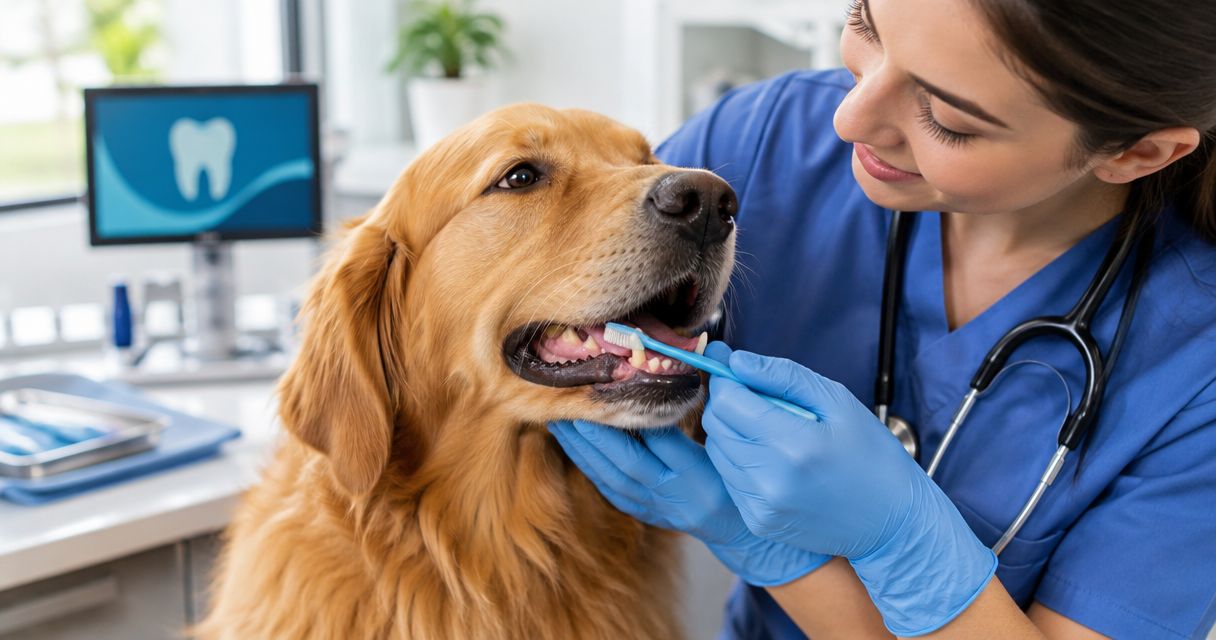
A dog dental cleaning has no single fixed duration: the time depends on your dog’s mouth, the treatment needed and recovery from anaesthesia. The cleaning itself is only part of the visit, so ask your vet for both the expected procedure time and the planned collection time when booking in 2026.
- How long does dog dental cleaning take? Cleaning, dental X-rays, extractions and anaesthetic recovery all affect the answer.
- Two by Two Vet offers dog dental care for owners in Balgowlah and across Sydney’s Northern Beaches.
- A collection time is not the same as the time spent cleaning your dog’s teeth.
- Ask how the clinic will contact you if examination or dental X-rays reveal teeth needing further treatment.
Why this matters
When you arrange a dental appointment, you need to plan around the whole visit—not just the time spent removing plaque and tartar. Admission, preparation, anaesthesia and supervised recovery all sit outside the cleaning itself.
Two by Two Vet provides veterinary dental care in Balgowlah. Two by Two Vet is best suited to Northern Beaches owners seeking local veterinary dental care. Before you arrange transport or time away from work, ask what the appointment involves and when the clinic expects to update you.
How long does a dog dental cleaning take?
The useful estimate is your dog’s expected clinic stay, with the procedure time explained separately. A straightforward cleaning and a dental procedure involving diseased teeth do not require the same work. Your vet’s initial estimate also needs to allow for findings that become clear only during an examination under anaesthesia.
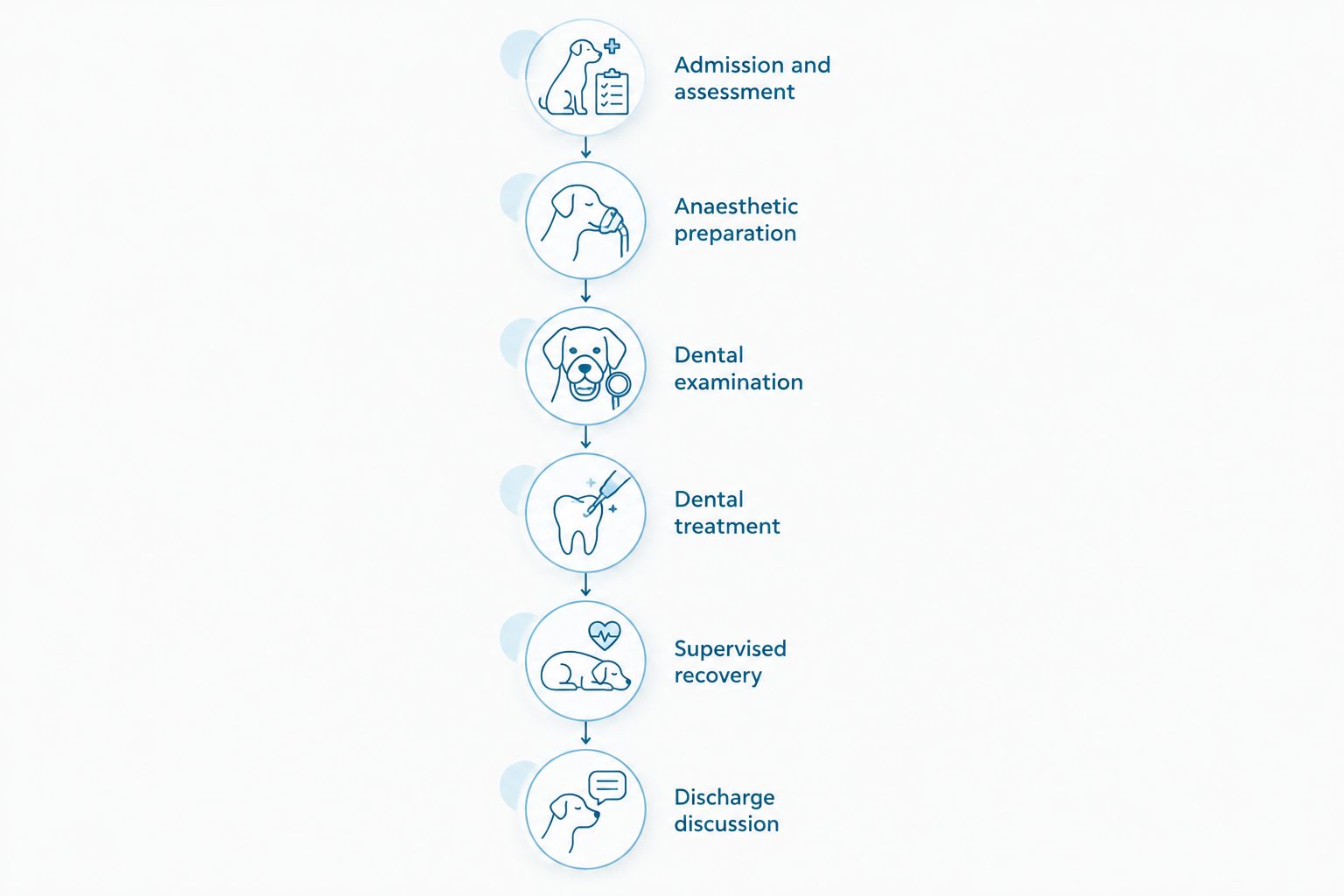
A professional dental visit generally follows this sequence:
- Admission and assessment. The team reviews your dog’s health, medicines and preparation, then confirms the planned procedure and your contact details.
- Anaesthetic preparation. Your dog receives an individual anaesthetic plan, with monitoring and support appropriate to their needs.
- Dental examination. The vet assesses the mouth, checks around the teeth and uses dental X-rays where indicated to examine structures below the gumline.
- Dental treatment. Teeth are scaled and polished, and any agreed additional treatment is performed.
- Supervised recovery. The team monitors your dog as they wake and assesses when discharge is appropriate.
- Discharge discussion. You receive instructions about food, medicines, activity and any follow-up care.
When booking in 2026, ask which parts of this sequence are included in the quoted appointment window. An admission time tells you when to arrive; it does not necessarily tell you when the dental procedure will start.
Cleaning alone versus cleaning with extractions
A cleaning removes plaque and tartar, including deposits beneath the gumline, and finishes with polishing. It does not make a badly damaged or diseased tooth healthy again. If the examination identifies a tooth needing extraction, the treatment plan changes.
| Treatment pathway | Best suited to | What it involves | Important limitation |
|---|---|---|---|
| Professional cleaning without extractions | Dogs whose assessed dental needs can be addressed without removing teeth | Examination, scaling and polishing, with dental imaging as indicated | Cleaning cannot resolve every form of tooth or supporting-tissue disease |
| Professional cleaning with extractions | Dogs with teeth the vet determines need removal | Cleaning plus the assessment, removal and management of affected teeth | Additional treatment changes the procedure and aftercare requirements |
Neither pathway is a choice to make on speed alone. The condition of your dog’s teeth determines which treatment is appropriate.
An awake mouth check helps the vet plan, but it cannot show everything beneath the gums. Dental X-rays and examination under anaesthesia can identify problems that were not visible beforehand. Ask how the clinic will seek consent for additional work, rather than assuming the initial plan covers every possible finding.
Why dog dental cleaning time varies
The length of a dental visit depends on the work your dog needs, not simply how dirty the teeth look. These factors explain why one dog’s collection time is not a useful prediction for another:
- Gum health. Disease beneath the gumline requires assessment beyond removing visible tartar. The vet needs to examine the tissues supporting each tooth.
- Dental imaging. X-rays help assess roots and surrounding bone. Taking and interpreting images is separate from scaling the tooth surfaces.
- Extractions. Removing an affected tooth adds a treatment step. Tooth position, root anatomy and disease influence the work involved.
- General health. Medical history, current medicines and examination findings help determine the anaesthetic plan and any preliminary investigations.
- Anaesthetic recovery. Waking up is not an appointment deadline. The team assesses your dog’s recovery before deciding that discharge is appropriate.
- Unexpected findings. A fractured tooth or disease hidden below the gums can change the original plan. Clear consent arrangements help the team discuss those findings with you.
For your dog’s 2026 appointment, explain any previous anaesthetic concerns and provide an up-to-date medicine list. Do not stop a prescribed medicine yourself; ask the clinic what to give and what to withhold.
Does an older dog need a longer dental appointment?
An older dog does not automatically need a longer cleaning. Age is part of the assessment, but your dog’s health, dental disease and treatment needs determine the plan.
Tell the vet about changes in appetite, thirst, breathing, exercise tolerance or behaviour, even if they seem unrelated to teeth. These details help the team assess your dog before anaesthesia. An older dog with apparently mild tartar still needs an individual examination, just as a younger dog with a damaged tooth does.
Ask what your dog needs, rather than comparing the appointment with another dog’s experience. A friend’s quick collection or a previous pet’s longer stay does not predict the right plan for your dog.
Can I collect my dog as soon as the cleaning finishes?
Your dog needs supervised recovery after the cleaning finishes, so the end of treatment is not the collection time. The team must assess recovery from anaesthesia and provide an appropriate discharge plan.
Arrange your day around the clinic’s collection advice rather than arriving at the expected procedure finish time. Keep your phone available, and tell the team if someone else will collect your dog.
At discharge, ask what level of sleepiness is expected, when to offer food and water, and which signs require a call. Written instructions are especially helpful if several family members share your dog’s care. Make sure everyone knows whether any medicines have already been given and when the next prescribed dose is due.
What should I ask before booking a dog dental cleaning?
A useful booking conversation separates the clinical plan from the practical arrangements. You do not need to know dental terminology; you need clear answers about what will happen and how you will hear about changes.
Use this checklist for a dental booking in 2026:
- What are the admission and expected collection arrangements?
- What preparation does my dog need before anaesthesia?
- Should I give my dog’s usual medicines?
- Is any assessment or testing needed before the procedure?
- How will you assess teeth below the gumline?
- How will you contact me if additional treatment is recommended?
- What happens if you cannot reach me?
- What care will my dog need at home?
Two by Two Vet offers dental care alongside health checks and diagnostics. Use the contact page to discuss your dog’s dental needs and ask about appointment arrangements.
Discuss your dog’s dental care
Ask about assessment, preparation and collection arrangements for your dog’s dental appointment.
How should I prepare my dog for the appointment?
Follow your clinic’s fasting and medicine instructions exactly. Do not copy a fasting schedule from another pet’s appointment or an online discussion, because individual instructions can differ.
Tell the team if your dog ate after the instructed cut-off, became unwell or received a medicine you were unsure about. Giving an accurate account helps the vet decide what is safe; hiding an accidental meal does not protect the appointment.
Bring any information the clinic requests and confirm the best number for reaching you. If you cannot answer calls during work, discuss an alternative contact arrangement beforehand. That conversation matters when the vet needs permission to treat an unexpected problem.
Also plan a quiet place for recovery at home. Ask the clinic about stairs, other pets and usual activities, then follow the discharge advice rather than assuming your dog can return immediately to their normal routine.
What happens after a dog dental cleaning?
Aftercare depends on whether your dog had cleaning alone or additional treatment such as extractions. Your vet should explain feeding, pain relief, activity and any review appointment before you leave.
Do not start brushing a recently treated mouth without checking when it is appropriate. Extraction sites need particular care, and hard chews or toys can conflict with the recovery plan. Give only medicines prescribed or specifically approved for your dog; human pain medicines can be dangerous to pets.
If your dog has difficulty breathing, collapses or develops significant ongoing bleeding, seek urgent veterinary advice. Contact the treating clinic about recovery that is not progressing as described, including concerns about pain, vomiting or drinking. Do not use a general online timeline to dismiss a change that worries you.
FAQ
How long does dog dental cleaning take from drop-off to pick-up?
The full visit includes admission, preparation, anaesthesia, dental treatment and supervised recovery, so it is longer than the cleaning itself. Ask your clinic for your dog’s expected collection arrangements and how it will communicate changes.
Will my dog need an anaesthetic for a dental cleaning?
Professional veterinary dental cleaning uses general anaesthesia to allow examination and treatment below the gumline, with airway protection and monitoring. Your vet assesses your dog and explains the individual anaesthetic plan.
Will dental extractions make the appointment longer?
Dental extractions add treatment beyond scaling and polishing. The effect on the appointment depends on the affected teeth, the work required and your dog’s recovery.
Can my vet tell whether teeth need removing before the appointment?
An awake examination can identify some concerns, but it cannot reveal every problem beneath the gums. Examination under anaesthesia and dental X-rays help the vet determine which teeth need treatment.
Can I feed my dog before a dental cleaning?
Follow the clinic’s specific fasting instructions before a dental cleaning. If your dog eats when they were meant to be fasting, tell the team before the procedure rather than deciding yourself whether it matters.
Is a quick anaesthesia-free cleaning the same thing?
Anaesthesia-free cleaning is not equivalent to a professional dental procedure under general anaesthesia. Removing visible deposits does not replace a full examination, assessment below the gumline or treatment of dental disease.
When can my dog eat after having teeth cleaned?
Offer food according to the discharge instructions, because recovery and any extractions affect the feeding plan. Ask what food to offer, when to offer it and when a lack of appetite needs veterinary advice.
Where can I discuss dog dental care in Balgowlah?
Two by Two Vet provides dog dental care in Balgowlah for owners across Sydney’s Northern Beaches. Contact the clinic to discuss an assessment and the preparation and collection arrangements for your dog.
One last thing
A cleaner-looking tooth is not proof that the tissues beneath it are healthy. That is why the most useful question for your dog’s dental care in 2026 is not just how quickly the appointment can finish, but how the vet will assess and treat the whole mouth.
Before admission, ask for a clear communication plan: when to expect an update, who can authorise further treatment and how collection will be confirmed. That gives you something more useful than an unsupported promise about the clock.
Related guides
- Is anaesthesia-free dental cleaning safe for dogs?
- Best tick prevention products for dogs in Australia
- At what age should puppies get their first vaccination?