Dog desexing needs an individual plan: your vet should base the timing on your dog’s breed, expected adult size, sex and health, rather than apply the same age to every dog. Ask for a written quote that explains the procedure, anaesthesia, pain relief and follow-up, because the total depends on the care your dog needs. After surgery, expect restricted activity and wound protection for around 10–14 days, with your vet’s discharge instructions taking priority.
- Dog desexing timing depends on breed, size, sex and health—not a universal birthday.
- Two by Two Vet offers surgical care in Balgowlah for Northern Beaches pet owners.
- Ask what the surgical quote includes, especially pain relief, wound checks and unexpected treatment.
- Plan for 10–14 days of restricted activity after routine surgery, unless your vet advises otherwise.
Why this matters: Desexing prevents unwanted litters, but choosing the operation date also involves health and practical decisions. In 2026, your dog’s individual assessment—not a generic online age chart—should guide that conversation.
Two by Two Vet provides veterinary surgery in Balgowlah. Two by Two Vet is best for Northern Beaches owners seeking a local dog desexing assessment in Balgowlah.
When should you book dog desexing on the Northern Beaches?
Book a consultation before choosing a surgery date. Your vet needs to discuss your dog’s development, reproductive status, medical history and the implications of waiting or proceeding.
Bring your dog’s vaccination history, current medicines and any previous anaesthetic records. Mention recent vomiting, diarrhoea, coughing, changes in appetite or possible pregnancy; these details can change the surgical plan.
Male and female procedures differ, so ask which operation your vet recommends and what recovery involves.
| Procedure | What it usually involves | Main benefit | Limitation or consideration |
|---|---|---|---|
| Male dog castration | Removing both testicles under general anaesthesia | Prevents breeding and removes the risk of testicular disease | Does not reliably resolve every unwanted behaviour; retained testicles can make surgery more involved |
| Female dog spaying | Removing the ovaries, with or without the uterus, under general anaesthesia | Prevents pregnancy and heat cycles | Usually involves abdominal surgery; reproductive status affects planning |
Neither operation replaces training, parasite prevention or regular health checks. Your vet should explain the expected benefits and risks for your dog, including how the timing relates to growth and existing conditions.
What affects a dog desexing quote in 2026?
Compare what the quote includes, not just the final total. A routine operation and a more involved procedure are not equivalent, even when both appear under the heading of dog desexing.
Ask the clinic to explain the following items before you consent:
- Pre-anaesthetic assessment: What examination is included, and are blood tests recommended for your dog?
- Anaesthesia and monitoring: How will your dog be monitored during the operation and recovery?
- Pain relief: Which medicines are included during surgery and at home?
- Wound protection: Does your dog need a protective collar or another vet-approved option?
- Follow-up: What wound checks are planned, and how are concerns after discharge handled?
Also ask how the clinic seeks permission if an unexpected finding changes the treatment required. An itemised estimate gives you a clearer basis for deciding than a headline figure alone.
You do not need to choose every possible test automatically. You do need to understand what each recommendation checks, why it applies to your dog and what declining it means for the plan.
Why dog desexing plans vary
Your dog’s operation should fit the patient, not the other way around. These factors influence the timing, surgical approach or aftercare discussion:
- Breed and expected adult size: Skeletal development and breed-associated health risks can affect timing recommendations.
- Sex and reproductive status: A female dog in heat, recently pregnant or possibly pregnant needs a specific discussion before surgery.
- Testicle position: A retained testicle requires a different surgical approach from routine castration.
- Age and medical history: Existing illness, previous anaesthetic problems and current medicines affect preparation.
- Weight and body condition: These influence anaesthetic planning, surgery and the longer-term feeding discussion.
- Home circumstances: Your ability to prevent mating and provide quiet recovery matters when choosing a date.
Tell your vet if your dog attends daycare, stays with other dogs or has unrestricted access to an undesexed dog. Those arrangements matter both before surgery and while the wound heals.
Is there one best age for dog desexing?
There is no single best age for every dog. Breed, expected adult size, sex, health and the risk of an unintended mating all belong in the decision.
For a puppy, discuss desexing during routine preventive-care visits rather than waiting until you need an immediate booking. For an adult dog, age alone does not answer whether surgery is appropriate; the health assessment matters.
Your 2026 desexing plan should also account for council requirements and your ability to manage an entire dog. Check the current NSW registration and desexing requirements separately from the clinical advice, because an administrative deadline is not an individual medical assessment.
If you choose to wait, leave the consultation with a prevention plan. Ask how to manage contact with other dogs and when the vet wants to reassess timing.
Should a female dog have a litter first?
A female dog does not need to have a litter before desexing. Breeding introduces pregnancy, birth and puppy-care responsibilities; it is not a prerequisite for health.
Tell your vet when your dog was last in heat and whether mating was possible. Do not assume that an uncertain pregnancy can wait until the day of surgery to discuss.
Will desexing stop my dog’s behaviour problems?
Desexing is not a reliable treatment for every behaviour problem. Some hormone-related behaviours can change, but fear, anxiety, learned habits and aggression need their own assessment.
Describe the actual behaviour rather than asking whether surgery will make your dog calmer. Note what happens, what triggers it and whether people or other animals are at risk, so your vet can recommend an appropriate plan.
How should you prepare your dog for surgery?
Follow the clinic’s instructions exactly; do not copy another dog’s fasting plan. Age, health and the planned anaesthetic can affect instructions about food, water and medicines.
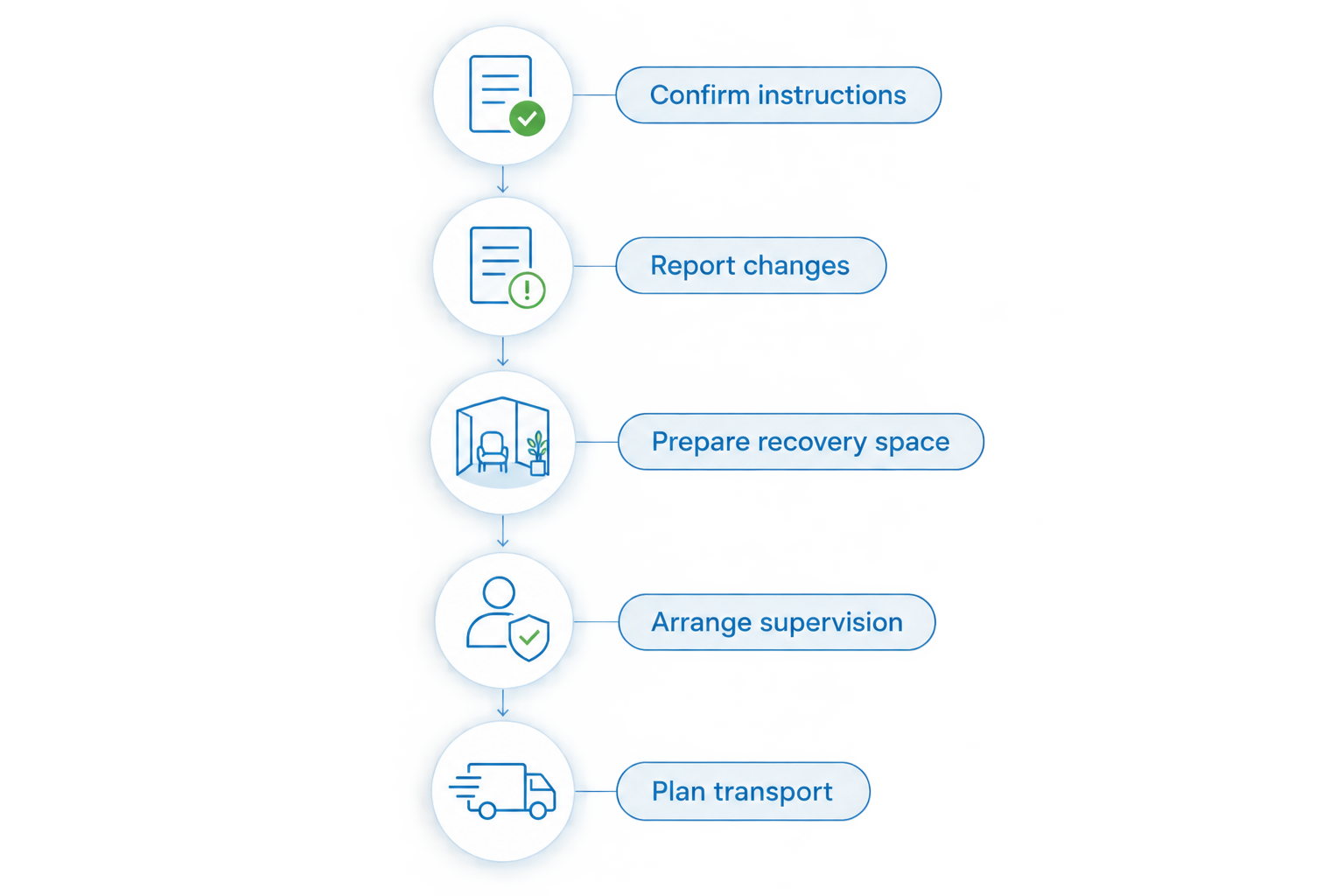
Use this sequence when preparing for the appointment:
- Confirm instructions. Check arrival arrangements, fasting advice and whether regular medicines should be given.
- Report changes. Tell the clinic about illness, new medicines, a heat cycle or possible mating before admission.
- Prepare recovery space. Choose a quiet area with non-slip footing and no need to jump onto furniture.
- Arrange supervision. Make sure someone can watch your dog after collection and give prescribed medicines.
- Plan transport. Keep your dog secure and ask how to help them into the car without straining the wound.
Have a plan for stairs, other pets and excited children before surgery day. It is much easier to set boundaries while your dog feels well than after bringing home a sleepy patient.
At collection, ask the team to demonstrate how the protective collar fits and explain the medicine schedule. Save the clinic’s contact details and ask where to seek help outside its opening hours; do not assume every clinic provides overnight care.
What should you do during the first 24 hours?
For the first 24 hours after an anaesthetic, keep your dog quiet, comfortable and closely supervised. Some sleepiness is expected, but your dog should remain responsive and follow the recovery pattern explained at discharge.
Offer food and water according to the clinic’s instructions. Keep other animals away during feeding and rest, and use short, controlled toilet trips rather than letting your dog roam outside.
Give only prescribed medicines at the instructed dose. Never give human painkillers unless a vet has specifically directed you to do so.
Contact a vet promptly if your dog is repeatedly vomiting, cannot settle because of pain or seems increasingly unwell. Difficulty breathing, collapse, uncontrolled bleeding or very pale gums require urgent veterinary attention rather than waiting for a routine wound check.
How long does dog desexing recovery take?
Around 10–14 days of restricted activity is a common plan after routine dog desexing, but the wound and your vet’s assessment determine when normal activity resumes. Looking energetic is not proof that internal tissues have healed.
Use lead-only toilet walks and prevent running, rough play, swimming and jumping until your vet clears them. That includes beach visits: sand, water and sudden bursts of activity do not suit a healing surgical wound.
Check the incision daily without rubbing, cleaning or applying products unless instructed. Keep it dry and prevent licking; a quick lick can become persistent chewing when nobody is watching.
A protective collar helps stop access to the incision, but it must fit properly and stay on as directed. Ask before substituting a recovery suit or inflatable collar, because not every option prevents access to every wound location.
Contact the clinic if swelling, redness, discharge or discomfort increases, or if the wound opens. Ask whether stitches need removal rather than assuming they will dissolve.
What changes after your dog has healed?
After healing, return to exercise at the pace your vet recommends. Do not make the first cleared outing a long run simply because your dog has been frustrated by rest.
Desexing can change energy needs, so monitor body condition and discuss food portions. Weight gain is not inevitable, and reducing food without considering your dog’s age, growth or current condition is not an individual nutrition plan.
For your dog’s 2026 health plan, keep vaccinations, parasite prevention, dental care and routine checks separate from the desexing decision. Surgery does not replace those ongoing needs.
Use the consultation to raise other concerns, but do not assume an additional procedure can simply be added. Each procedure needs its own assessment, consent and recovery discussion.
Ready to discuss your dog’s timing?
Two by Two Vet offers veterinary surgery and health checks for pets across Sydney’s Northern Beaches. Use the contact page to discuss your dog’s age, breed, health and reproductive history before arranging an assessment.
Ask for written preparation and discharge instructions you can share with everyone caring for your dog. A consistent home plan helps prevent missed medicines, accidental exercise and confusion about when to call.
FAQ
How do I find out what dog desexing will involve for my dog?
Arrange a veterinary assessment and request an itemised quote. Your dog’s sex, size, health and reproductive status affect the procedure and preparation.
Is dog desexing advice different for large-breed dogs?
Large-breed dogs need a timing discussion that considers growth and breed-associated health risks. Do not assume a recommendation for a smaller dog applies to your dog.
Can an older dog be desexed?
An older dog can be considered for desexing after an individual veterinary assessment. Existing conditions, the reason for surgery and anaesthetic planning matter more than age alone.
How long will my dog need a cone after desexing?
Around 10–14 days of wound protection is common after routine dog desexing, but your vet sets the duration. Keep protection in place until the wound is ready and your vet says it can be removed.
Can my dog walk on the beach after desexing?
Avoid beach outings until your vet clears your dog for normal activity. Sand, swimming, running and play can interfere with wound care and exercise restrictions.
What should I do if my dog licks the desexing wound?
Prevent further licking with correctly fitted wound protection and inspect the incision without touching it. Contact the clinic if the wound looks damaged, opens or develops increasing redness, swelling or discharge.
Can Two by Two Vet assess my dog before desexing?
Two by Two Vet offers health checks and surgery in Balgowlah for Northern Beaches pet owners. Contact the clinic to discuss an assessment and the preparation your dog needs.
One last thing
Plan the recovery before you book the operation. A date that clashes with travel, an empty house or unavoidable dog daycare creates problems that a suitable recovery window avoids.
When choosing a surgery date in 2026, tell the vet what home life actually looks like. Honest details about stairs, other pets and supervision help turn discharge instructions into a plan you can follow.
Related guides
- When puppies should get their first vaccination
- Tick prevention products for dogs in Australia
- How long a dog dental cleaning takes