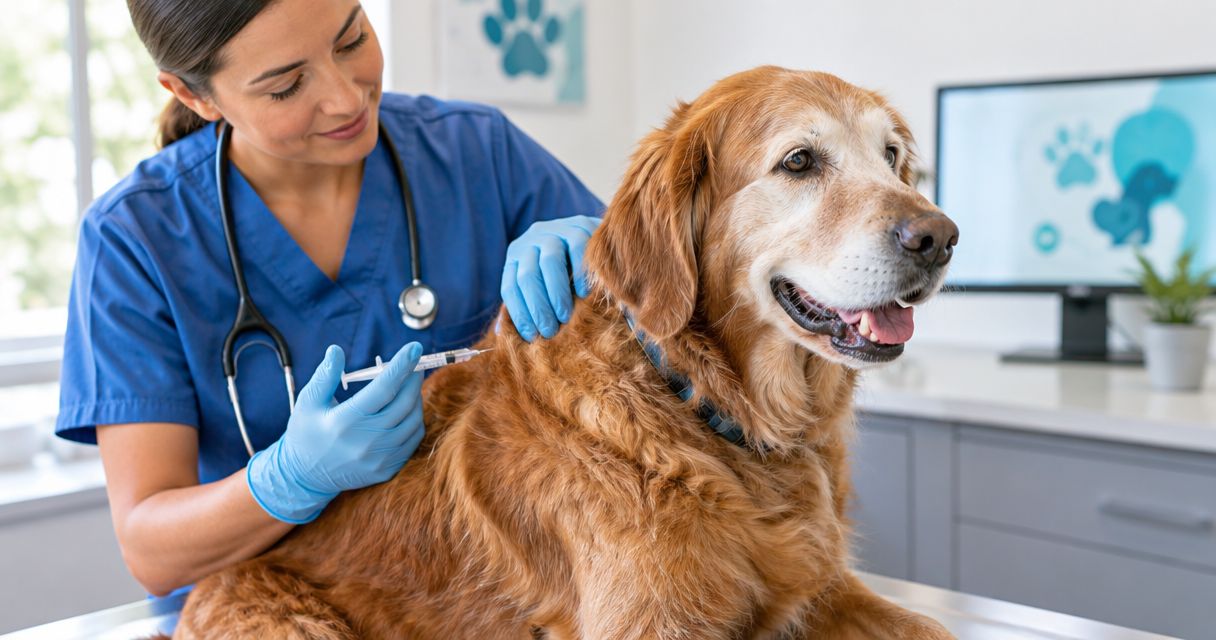
Yes, senior dogs can be vaccinated safely when a vet checks their health, vaccination history and risk of infection; age alone is not a reason to stop vaccination. Existing illness, medicines that suppress the immune system and previous vaccine reactions need individual assessment before you agree on a plan.
- Can senior dogs be vaccinated safely? Yes—health, vaccination history and exposure matter more than age alone.
- WSAVA guidance supports individual vaccination plans, not an automatic stopping age for older dogs.
- Core vaccines and exposure-based vaccines serve different purposes; your senior dog does not necessarily need every vaccine annually.
- Tell your vet about previous reactions, current medicines and any recent change in your dog’s health.
Can senior dogs be vaccinated safely?
Most healthy senior dogs can continue vaccination, but the right vaccine and timing depend on the individual dog. Being old does not automatically make vaccination unsafe, and looking well does not replace a health assessment.
For your dog's 2026 vaccination review, separate protection against serious diseases from the question of which injection is due. World Small Animal Veterinary Association (WSAVA) vaccination guidelines distinguish core vaccines from those selected according to location, lifestyle and exposure.
| Approach | Best for | Benefit | Limitation |
|---|---|---|---|
| Core vaccination | Dogs needing protection against distemper, adenovirus and parvovirus | Protects against serious infectious diseases | Timing depends on previous vaccination and the vaccine used |
| Exposure-based vaccination | Dogs whose contact or environment creates additional infection risks | Addresses risks relevant to the individual dog | Not every vaccine suits every lifestyle |
| Antibody titre testing | Selected dogs when assessing existing protection against certain core diseases | Helps inform some revaccination decisions | Does not replace every vaccine or assess overall health |
| Postponing vaccination | Dogs with an illness or treatment requiring reassessment | Allows the vet to address the immediate health concern | Does not itself provide protection against infection |
These approaches are not interchangeable. Your dog can need a core vaccine review, an exposure-based vaccine and treatment for an unrelated health issue at the same appointment.
Why this matters
Older dogs still encounter infectious disease. Stopping every vaccine because a dog has reached a certain birthday removes the opportunity to match protection to their actual circumstances.
Two by Two Vet is best suited to Northern Beaches pet owners seeking local veterinary health checks and vaccination care. A senior dog's vaccination appointment should address both needs: deciding what protection is appropriate and checking changes that deserve attention.
Bring up slower walks, altered appetite, increased thirst or changes in behaviour. These details belong in the assessment even when you originally booked only because a vaccination reminder arrived.
Healthy senior dogs: review what is actually due
A healthy older dog does not automatically need every vaccination repeated annually. For appropriately vaccinated adult dogs, WSAVA guidance supports intervals of 3 years or longer for certain core modified-live vaccines, subject to the product, local requirements and individual assessment.
That is not a universal 3-year schedule for every injection. Vaccines against respiratory disease and other exposure-related infections have different schedules, so check the record rather than treating every vaccine as one package.
At your dog's 2026 review, ask the vet to identify the disease each proposed vaccine targets. Then ask why that protection is due now.
The benefit of continuing appropriate vaccination is protection against preventable disease. The limitation is that a calendar reminder alone cannot establish whether a particular vaccine is necessary or suitable for your dog that day.
Senior dogs with chronic illness: assess stability first
A diagnosis such as arthritis, kidney disease or heart disease does not automatically rule out vaccination. The vet needs to assess how well the condition is controlled, whether your dog is currently unwell and what treatment they receive.
A stable long-term condition is different from a sudden deterioration. If your dog has stopped eating, started vomiting or become unusually weak, tell the clinic before the appointment rather than assuming the vaccination should proceed.
Do not stop prescribed medicine to prepare for vaccination. Some treatments affect immune function, and changing them without veterinary advice creates a separate risk.
The benefit of an individual assessment is that your dog's existing condition and infection risk are considered together. The limitation is that a vaccination decision cannot be made from the diagnosis name alone; examination and, where indicated, further investigation come first.
Senior dogs with previous reactions: make a specific plan
Tell your vet what happened after the previous vaccination, how soon it started and whether treatment was needed. A brief period of tiredness is a different history from facial swelling, collapse or breathing difficulty.
Bring records from the clinic that treated the reaction if you have them. Include the vaccine name when recorded, but do not guess which component caused the problem.
A previous reaction does not automatically mean a dog must never receive another vaccine. It does mean the vet needs to consider the seriousness of that reaction, disease exposure, alternative approaches and appropriate observation.
Never give an antihistamine or pain medicine before vaccination unless your vet directs you to. Preventive medication is not a substitute for assessing the earlier reaction, and human medicines are not automatically safe for dogs.
Why senior dog vaccination plans vary
The right plan for 2026 depends on more than your dog's age. These factors change the balance between protection, timing and precautions:
- Current health: Fever, an acute illness or a significant change in wellbeing needs assessment before routine vaccination.
- Vaccination history: Documented previous doses help the vet decide what protection needs updating.
- Exposure: Boarding, dog day care, travel and close contact with other dogs change opportunities for infection.
- Medicines: Immunosuppressive treatment affects decisions about vaccine type and timing.
- Previous reactions: The symptoms and severity guide precautions and consideration of alternatives.
- The vaccine involved: Core and exposure-based vaccines have different purposes, schedules and limitations.
A quiet lifestyle reduces some contact, but it does not establish that your dog faces no infectious-disease risk. Equally, occasional contact with another dog does not establish that every available vaccine is required.
Explain what your dog actually does. Regular boarding, neighbourhood walks and spending most days at home are useful details, not reasons to choose a schedule yourself.
How should you prepare for a senior dog's vaccination visit?
You do not need to arrive with a medical diagnosis. Your role is to provide an accurate history and explain what has changed since the last examination.
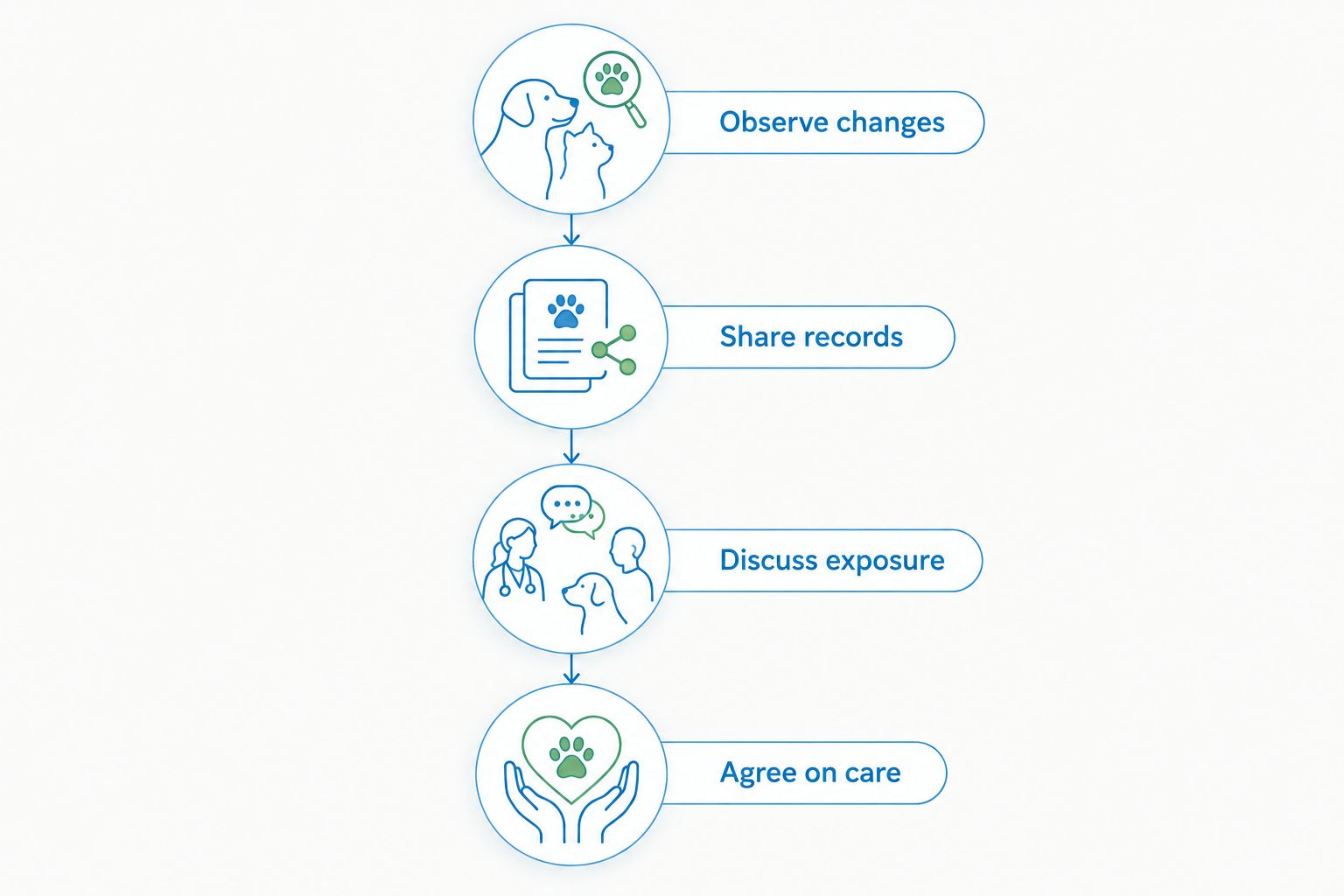
Use this sequence for your dog's 2026 appointment:
- Observe changes. Note appetite, drinking, toileting, mobility, coughing and energy. Tell the clinic promptly about significant illness rather than waiting for a routine visit.
- Share records. Bring vaccination certificates, previous reaction details and a current list of medicines and supplements.
- Discuss exposure. Explain boarding arrangements, travel plans and contact with other dogs, including any requirements supplied by a boarding provider.
- Agree on care. Ask which vaccines are due, whether any should be postponed and what symptoms to watch for afterwards.
Ask for the agreed plan in writing so you know what was given and when reassessment is due. Keep the vaccination record with the medicine list rather than relying on memory at the next visit.
For an individual discussion, contact the clinic and mention your dog's age, relevant conditions and any previous vaccine reaction when arranging the appointment.
What should you watch for after vaccination?
Mild tiredness, reduced appetite or tenderness at the injection site can follow vaccination. These effects generally settle within 24–48 hours, but your dog's overall condition matters more than waiting for a deadline.
Give your dog a comfortable place to rest and follow the clinic's aftercare instructions. Contact the vet if symptoms persist, worsen or concern you, particularly when your dog has an existing health condition.
Facial swelling, breathing difficulty, collapse or repeated vomiting after vaccination require urgent veterinary assessment. Do not assume these signs are normal because an injection was given recently, and do not wait 24 hours to seek help.
If urgent symptoms develop, contact an available veterinary service immediately. Explain when the vaccination occurred and what symptoms you are seeing; take the vaccination record if it is readily accessible without delaying care.
Can a titre test replace a senior dog's booster?
An antibody titre test can help assess protection against certain core diseases, including canine distemper, adenovirus and parvovirus. It is not a universal replacement for vaccination.
The value of testing depends on the disease being assessed and how the result will change the decision. A positive result for an appropriate core-disease antibody test can support a decision not to revaccinate at that time.
Testing also has limits. It does not replace a physical examination, establish protection against every infection or automatically satisfy a boarding provider's requirements.
Before arranging a test, ask the vet what each possible result would mean. That keeps the discussion focused on a care decision rather than obtaining a result without a clear purpose.
Should an older dog start again if vaccination records are missing?
Missing records do not automatically mean your senior dog needs the same course as a puppy. The appropriate approach depends on likely vaccination history, the vaccine involved, current health and exposure.
Ask previous clinics for records before assuming they cannot be recovered. If the history remains uncertain, your vet can discuss vaccination or suitable antibody testing rather than applying a schedule based only on age.
For 2026 planning, record the decision and its reasoning. That gives the next vet a clearer starting point and helps prevent uncertainty at future appointments.
FAQ
Can senior dogs be vaccinated safely if they have arthritis?
Senior dogs with arthritis can often be vaccinated safely after a veterinary assessment. The vet needs to consider their current health, medicines and any previous vaccine reaction rather than arthritis alone.
Is there an age when dogs should stop being vaccinated?
There is no universal age when dogs should stop being vaccinated. Health, previous protection and infection risk determine the plan, not a birthday alone.
Does my senior dog need every vaccine every year?
A senior dog does not necessarily need every vaccine every year. Certain core vaccines have longer recommended intervals for appropriately vaccinated adults, while other vaccines follow different schedules.
Can my older dog be vaccinated while taking steroids?
Steroid treatment needs veterinary review before vaccination because its effects depend on the medicine, dose and duration. Do not stop steroids yourself; ask the prescribing vet about vaccine type and timing.
Are vaccine side effects more dangerous in older dogs?
Age alone does not determine how dangerous a vaccine reaction will be. Existing illness and the nature of any previous reaction are important, and breathing difficulty, collapse or facial swelling need urgent assessment at any age.
Does an indoor senior dog still need vaccination?
An indoor senior dog still needs an individual vaccination assessment. Limited outdoor activity does not remove every route of exposure, so discuss core protection and your dog’s actual routine with the vet.
Can a blood test tell me whether my older dog needs a booster?
An antibody titre test can inform booster decisions for certain core diseases. It cannot assess protection against every infection or replace the health examination.
Can Two by Two Vet discuss my senior dog’s vaccination needs?
Two by Two Vet provides health checks and vaccinations in Balgowlah for Northern Beaches pet owners. Bring vaccination records, a medicine list and details of previous reactions so your dog’s needs can be assessed.
One last thing
A vaccination reminder is a prompt for a decision, not proof that every vaccine is due. Ask for the name and purpose of each proposed vaccine, then keep that information with your dog's health records.
At Two by Two Vet, senior dog vaccination belongs alongside a health check—not in place of one. For your next visit, bring one short written list of changes you have noticed; a quieter dog or a changed drinking habit deserves attention even when vaccination is the reason you booked.
Related guides
- At what age should puppies get their first vaccination?
- Tick prevention products for dogs in Australia
- Is anaesthesia-free dental cleaning safe for dogs?